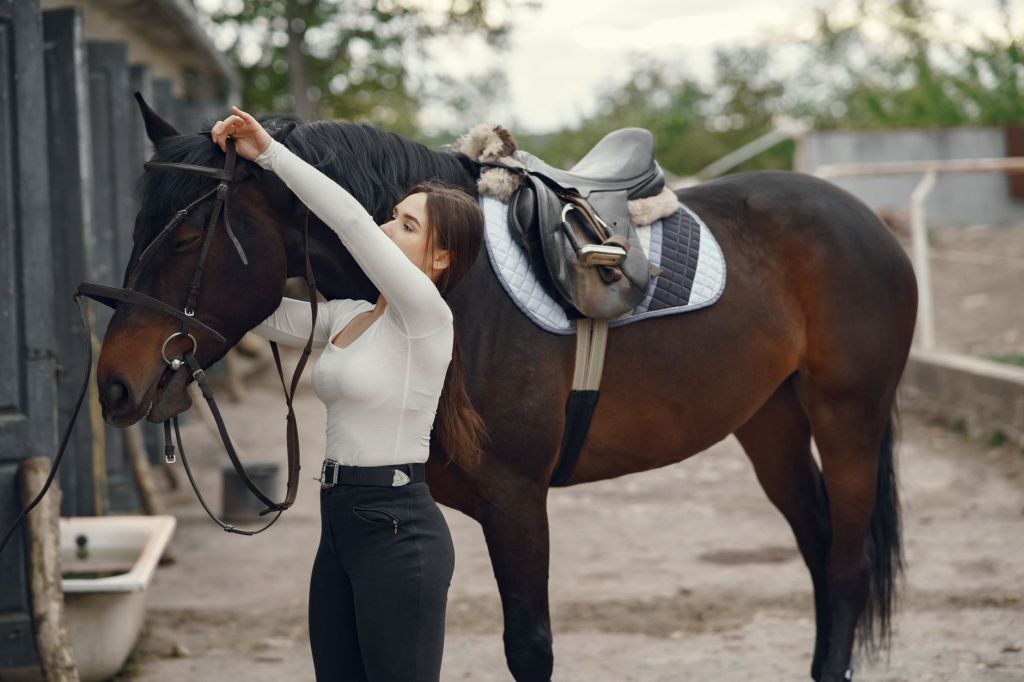
I’ve spent the last ten years working as a groom and rider in dressage sales barns.
During that time, I’ve held horses for hundreds of buyers.
I’ve watched nervous amateurs sit on their dream horse for the first time.
I’ve watched professionals pick apart horses that everyone else thought were perfect.
I’ve watched buyers spend $20,000.
I’ve watched buyers spend hundreds of thousands.
And after all those years, I realized something.
There are things you only notice when you’re the person quietly standing in the background.
The groom.
The one brushing horses.
Holding them.
Loading them.
Untacking them.
Cleaning stalls.
Listening.
Watching.
Nobody asks the groom what they think.
But the groom often sees everything.
This is the first post in a series where I’ll share some of the things I’ve learned from working behind the scenes in dressage sales barns.
Some of these observations might surprise you.
Others might completely change the way you buy your next horse.
Let’s begin.
1. Buyers usually decide within the first five minutes
They may not admit it.
But most people know very quickly whether they want the horse.
Everything after that often becomes an attempt to justify that feeling.
2. Buyers fall in love with movement
I understand why.
Big movement is exciting.
But I’ve watched buyers overlook horses with incredible temperaments simply because another horse had flashier extensions.
Sometimes the horse that impresses everyone isn’t the one that makes the best partner.
3. The quiet horse is often ignored
The horse that quietly stands in the aisle.
Loads easily.
Does everything asked.
Never makes a fuss.
It’s amazing how often buyers walk straight past that horse looking for something more spectacular.
4. The groom usually knows the horse better than anyone
Not always.
But often.
We feed them.
Catch them.
Wrap their legs.
Load them.
Clip them.
Walk them after the vet comes.
We see them every single day.
We know who hates having their ears touched.
Who loves turnout.
Who naps after lunch.
Who gets anxious when the weather changes.
It’s amazing how much you learn from simply being there every day.
5. Buyers rarely ask the questions that matter most
I’ve heard hours of conversations about bloodlines.
About breeding.
About scores.
About movement.
Much less often do I hear:
“Can I see the horse in its stall?”
“Can I watch it being tacked up?”
“Can I see it after the ride?”
Those answers usually tell you more about ownership than another extended trot.
6. Buyers often ignore their own instincts
I’ve watched people hesitate.
Pause.
Look uncertain.
Then convince themselves everything is fine because they really wanted the horse.
Sometimes your first instinct deserves more respect than your excitement.
7. Every horse has bad days
Even the really good ones.
A horse spooking during your viewing doesn’t automatically make it unsuitable.
Neither does a missed flying change.
The important question is whether the mistake feels like an exception…
…or the beginning of a pattern.
8. Professional riders make difficult horses look easy
I’ve watched horses transform the moment a professional rider climbed aboard.
That isn’t deception.
It’s skill.
Just remember that you’ll be riding the horse—not the professional.
9. The atmosphere changes when buyers arrive
The yard gets quieter.
People become more focused.
Everyone wants things to go smoothly.
That’s completely understandable.
Just remember that you’re seeing the barn on one carefully planned day.
10. Not every horse likes its job
This is difficult to explain.
Some horses walk into the arena looking eager.
Others look like they’re simply tolerating it.
After a while, you begin to notice the difference.
11. Buyers spend too much time looking at the horse
And not enough time looking at everything else.
The people.
The stable.
The interactions.
The little details.
They all matter.
12. Every seller believes their horse is special
And many of them are right.
But emotion affects sellers just as much as buyers.
Nobody knows a horse’s strengths better than the person who rides it every day.
Sometimes they also struggle to see its weaknesses.
13. The best buyers are the quiet ones
They don’t talk much.
They watch.
They listen.
They ask thoughtful questions.
They’re never in a hurry.
14. Good horses don’t always make good matches
I’ve seen wonderful horses sold to the wrong riders.
I’ve seen average horses become someone’s horse of a lifetime.
Finding the right partnership matters more than buying the most talented horse.
15. Most buyers don’t notice the groom
That’s perfectly okay.
But it also means they miss a lot.
Sometimes the groom’s body language tells you just as much as the seller’s.
16. Horses don’t read their advertisements
A horse doesn’t know it’s supposed to be a schoolmaster.
Or an FEI prospect.
Or amateur-friendly.
The horse is simply itself.
Your job is to discover who that really is.
17. The best horses are often the least dramatic
They’re not always the biggest movers.
They’re not always the most expensive.
They’re simply easy to live with.
Those horses are worth their weight in gold.
18. Buyers remember the spectacular moments
They remember the extended trot.
The flying changes.
The canter pirouettes.
They often forget the quiet details that matter every single day.
19. Every horse teaches you something
Even the ones you don’t buy.
Especially the ones you don’t buy.
20. Sometimes walking away is the smartest decision
Not because the horse is bad.
Because it isn’t right for you.
That’s an important difference.
21. The horse doesn’t know how much it costs
I’ve worked with expensive horses.
I’ve worked with inexpensive horses.
They don’t know their price tag.
And sometimes, neither would you if nobody told you.
22. Confidence is one of the most valuable qualities a horse can give you
The horse that makes you want to ride tomorrow is often worth more than the horse that impresses everyone watching from outside the arena.
23. Buyers often ask, “Can this horse get me to Grand Prix?”
A better question is:
“Will this horse make me enjoy the journey?”
Very few riders ever reach Grand Prix.
Every owner experiences the day-to-day partnership.
24. No horse is perfect
If someone tells you otherwise…
Keep asking questions.
25. The happiest buyers aren’t the ones who buy the most expensive horse
They’re the ones who buy the horse they genuinely enjoy.
The one they look forward to riding after work.
The one they trust.
The one that fits their life.
Because that’s what horse ownership really is.
This is just the beginning
These are only a few of the lessons I’ve learned while working behind the scenes in dressage sales barns.
There are plenty more stories to tell.
In future editions of Confessions of a Sales Barn Groom, I’ll share more about what happens before buyers arrive, what I notice during horse viewings, the conversations buyers never hear, and the small details that can completely change the way you evaluate a horse.
If you’re planning to buy a dressage horse—or you’re simply curious about what happens behind the scenes—there’s a lot more to come.
 Dressage Horse index
Leave a comment